Skip to content
Sunday, August 30, 2026 · Guatemala CityQ7.6242 per US$+0.00%
ADVANCE GUATEMALA
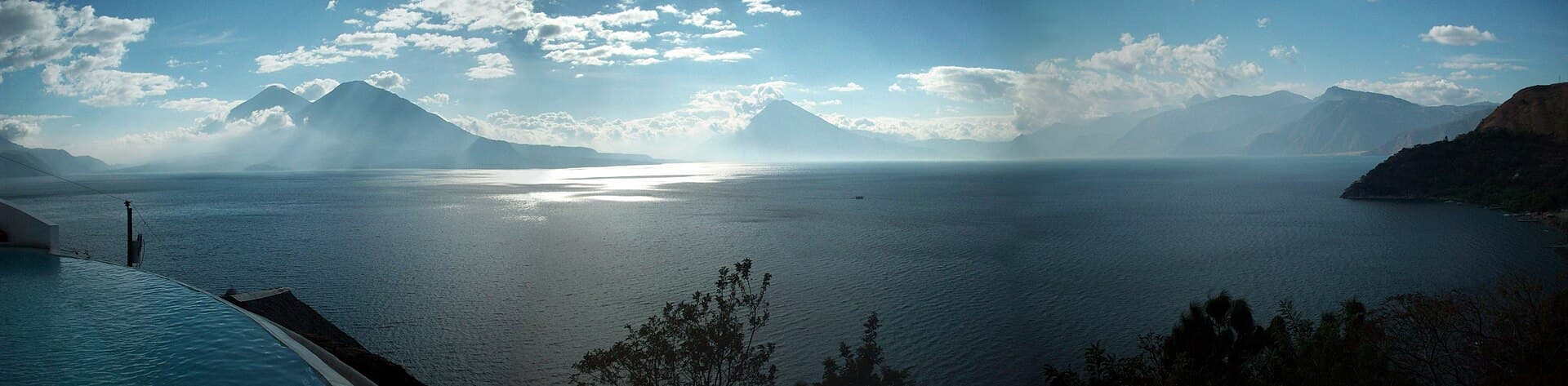
Lake Atitlán under its volcanoes, seen in panorama.

Energy

What it costs to switch the plant on.

Regulated electricity tariffs, access to the wholesale market, industrial water with no national law to order it, and the connectivity two operators divide between them.

Epiovesan: Emilio Piovesan · CC BY 3.0

Electricity and water

GDP as of Q1 2026

Gross value added · Electricity and water

Q5,549 M

Q1 2026 · banguat_sdmx

The fourteen divisions, by weight among themselves
2.7%
y/y
+3.2%

The fourteen divisions sum to 82.8% of the same quarter's nominal GDP; the remainder — net taxes on products, and whatever the series does not break out — is not distributed here. Each share is therefore a share among divisions.

banguat_sdmx · gdp_sector series, 14 divisions · share OF THE FOURTEEN SUMMED, not of GDP · nominal y/y change, not deflated

The investor atlas

Power, water and signal.

Researched · unverified

72 topics

The generation mix and the electricity tariffs CNEE regulates, the Large User threshold for buying on the wholesale market, industrial water in a country with no national law to order it, and telecoms: two operators, the submarine cables and coverage.

The research is written in English; quoted figures, source names and the titles of legal instruments stay in the language their source published them in.

Industrial water, wells and discharges

40 topics

No. Art. 127 of the 1985 Constitution declares that 'all waters are public-domain assets, inalienable and imprescriptible' and orders that 'a specific law shall govern this matter'; that law has never been issued. As a result there is no general water law and no national extraction fee: the legal vacuum is the rule of the game, and the right to drill on one's own land rests on the Civil Code. The only national rule with teeth today is the one on wastewater discharges (Governmental Agreement 236-2006). Bill 6816 (Aug 2026) sets out to fill the vacuum, but has no timetable for a committee opinion. The phrase 'a 40-year debt' that circulates in other material does not appear in No-Ficción (which says only that 'the Constitution ordered this matter to be regulated decades ago') and was withdrawn as a quotation in the audit.

Figures
Constitución vigente que ordena la ley específica de aguas1985desde 1985

The typical path has three steps. First, an approved MARN environmental instrument matching the project's category (the Aprende Guatemala page describes the procedure and a Q5,000 fine for operating without a license, without giving a fee schedule). Second, the municipal drilling license and fee: each municipality sets the amount in its schedule of fees; in the capital it is handled at the municipal single window, and the municipality requires the approved environmental instrument before it will license. Third, once drilling is finished, a report with the well's stratigraphy and yield goes to the municipality; for projects EMPAGUA reviews (through its Project Evaluation Unit), pumping tests, level measurements and production capacity are required. The municipal license amounts by municipality are not held centrally and remain to be compiled.

Figures
Multa por operar sin licencia ambientalQ5,000vigente (según Aprende Guatemala)

municipal license amounts to be confirmed municipality by municipality

The tariff in force since 1 Dec 2025 includes a fixed charge of Q42.56 a month plus a volumetric rate by consumption band; the 'Particulares' and 'Gobierno' tables are published as images and the figures by band cannot be extracted. The earlier reference (Feb 2024, phased in progressively over the year) for individual users was Q2.57/m³ (1-20 m³), Q4.03 (21-40), Q5.26 (41-60), Q11.07 (61-120) and Q13.83 (above 120 m³), after an increase of 24-30%. The commercial/industrial rate by band was not located: the industrial category has to be confirmed in Agreement COM-56-2023, extracted from the Diario de Centro América (21 Dec 2023) or requested from EMPAGUA (tel. 1551, number to be verified).

Figures
Cargo fijo EMPAGUA, servicio medidoQ42.56/mesvigente desde 1-dic-2025
Tarifa individual por rangoQ2.57 (1-20 m³) / Q4.03 (21-40) / Q5.26 (41-60) / Q11.07 (61-120) / Q13.83 (>120 m³)feb-2024
Alza tarifaria24-30%feb-2024

the industrial tariff was not located; the Dec 2025 tables exist only as images

Taken as a whole the country has about 97,120 Mm³/year available (more than 20 m³ per inhabitant per day): aggregate abundance, badly distributed; the problem is local, not national. The water-stress threshold is less than 1,700 m³ per person per year, and in highland departmental capitals and in Guatemala City the figures fall below 500 m³, with dependence on a declining aquifer. The figure of 97,120 Mm³/year comes from the INSIVUMEH/PLAMAR balance reproduced in the National Policy on Integrated Water Resources Management (GIRH), per search extracts; the CNB page sat behind anti-bot protection during the audit of 2026-08-22 and the policy PDF still has to be checked.

Figures
Disponibilidad hídrica nacional~97,120 Mm³/año (>20 m³/día/hab)balance INSIVUMEH/PLAMAR vía Política Nacional de GIRH
Umbral de estrés hídrico<1,700 m³/persona/añoreferencia
Disponibilidad en cabeceras del altiplano y Ciudad de Guatemala<500 m³/persona/añoreferencia CNB

the CNB source was inaccessible during the audit; check the PDF of the National GIRH Policy

It is the Regulation on Wastewater Discharges and Reuse and Sludge Disposal, in force since May 2006, and today the only national water obligation with teeth. Every generating entity must draw up a Technical Wastewater Study (ETAR) characterizing its effluents, discharges, reuse water and sludge, with technical endorsement, and keep it available to MARN. It set a staged reduction of loads (BOD and the other parameters) in four stages from 2011; the final phase, with full parameters, has been mandatory for private generating entities since 2 May 2024. Municipalities obtained an extension to 2 May 2025 through AG 285-2022, for municipal systems only. For foreign investment held to ESG standards it is the design floor for any industrial wastewater treatment plant (PTAR).

Figures
Vigencia del AG 236-2006desde may-20062006
Etapas de reducción de cargas4 fases desde 20112011-2024
Parámetros plenos obligatorios, entes generadores privados2-may-20242024
Prórroga para sistemas municipales (AG 285-2022)2-may-20252025

Yes. The Civil Code (Decree-Law 106) is the legal basis for self-supply: art. 579(4) declares 'groundwater obtained by artificial means on private property' to be privately owned, and art. 581 allows any owner to open wells on their land 'provided such works cannot diminish or divert public or private waters from their natural surface course' destined for public service or for a pre-existing use held under legitimate title; the authority may order the works suspended at the request of interested parties. Arts. 582-583 set minimum distances: 40 m from other people's buildings, a railway or a road; 100 m from another water source, spring, river, canal, irrigation ditch or public watering place, unless the owners or the municipality grant a license; 2 m between wells inside a settlement and 15 m in open country. Art. 584 assigns ownership of the water obtained to whoever brings it to the surface. The audit corrected the citation: arts. 579-580 were cited previously, but art. 580 deals with riverbeds and channels.

Figures
Distancia mínima a edificios ajenos, ferrocarril o carretera40 mvigente
Distancia mínima a otro alumbramiento, fuente, río, canal, acequia o abrevadero público100 mvigente
Distancia mínima entre pozos2 m en poblado / 15 m en el campovigente
See the other 34

In practice most industry self-supplies from its own mechanical well and tops up with municipal service (EMPAGUA in the capital), private suppliers (Agua Mariscal) or bulk water. More than 2,000 wells are estimated in the Guatemala valley, of which only about 300 are exploited under controlled conditions by companies or public bodies. There is no national well registry and no metering of extraction, a weakness acknowledged by EMPAGUA/MGCS's own Water Security Strategy (2024). The figures were checked against the PDF in the audit of 2026-08-22.

Figures
Pozos estimados en el valle de Guatemala>2,0002024 (estrategia EMPAGUA/MGCS)
Pozos explotados de forma controlada por empresas u organismos públicos~3002024 (estrategia EMPAGUA/MGCS)

The fee and license for drilling each mechanical well (urban or rural) is set municipality by municipality under the Municipal Code and the schedules of fees; there is no national tariff. Infile's compilation of municipal rules shows, for example, the drilling license fee of the Guatemala City municipality (Municipal Agreement 11-05-1995), of San José Pinula (Minute 33-94.3) and of San Lucas Sacatepéquez (Minute 019-94), but with no amounts in the index. The cost for each target municipality (Guatemala, Villa Nueva, Mixco, Escuintla, San José Pinula) is recorded as 'not found': it has to be gathered at each municipality's single window.

amounts are not public in the source; to be gathered municipality by municipality

The Environmental Assessment, Control and Follow-up Regulation (AG 137-2016, as amended) requires an environmental form or diagnostic according to the project's category, and the municipality asks for the approved instrument before licensing the drilling. According to the official catalog of procedures, a category C environmental license costs Q50 per year (Q50 to Q250 for 1-5 years; resolution in 3-10 days) and category CR instruments, predictive and corrective alike, cost Q50 (5 days). Categories A/B1/B2 cost more: the published range runs 'from Q50.00 up to Q35,000.00' (La Hora, 1 Dec 2022). The audit corrected earlier figures (Q100/Q150 attributed to Aprende Guatemala, which does not contain them). The text as amended by AG 317-2019 remains to be confirmed as regards timelines.

Figures
Licencia ambiental categoría CQ50 por año (Q50-Q250 por 1-5 años); resolución 3-10 díascatálogo oficial, consultado 2026-08-22
Instrumentos ambientales categoría CR, predictivos y correctivosQ50; 5 díascatálogo oficial, consultado 2026-08-22
Rango de costo de licencias ambientales (todas las categorías)Q50 a Q35,0001-dic-2022

Not documented. The dossier had recorded a requirement for a prior opinion from AMSCLAE in order to drill wells in the Atitlán basin, attributed to the Infile compilation; the audit of 2026-08-22 found that this page lists only municipal fees for Guatemala, San José Pinula and San Lucas Sacatepéquez, and the requirement was downgraded to 'not found'. It is a potential territorial restriction, today with no documentary support; it remains to be investigated in AMSCLAE's own rules or ruled out.

not found in the source cited; to be investigated in AMSCLAE's rules

Wells in the metropolitan area run from 25 to more than 600 m deep (a Funcagua estimate cited by Agencia Ocote, 6 Aug 2024), and EMPAGUA today drills wells 'at least 1,800 feet deep' (Prensa Libre, 6 Jul 2026). In the northern part of the valley the water table is falling at an 'average rate of approximately 9 m/year': 8 m/year in Lavarreda-Rodeo, 11 in Vista Hermosa and Canalitos and 7 in the North sector, across 32 monitored wells with 4-10 years of records (a 2013 ERIS-USAC study). The operating consequence is re-drilling and higher pumping costs. The audit corrected the attribution of the depth figure (previously to ERIS-USAC, which does not contain it).

Figures
Profundidad de pozos, área metropolitana25 a >600 m2024 (estimación Funcagua)
Profundidad de los pozos nuevos de EMPAGUAal menos 1,800 piesjul-2026
Descenso promedio del nivel freático, norte del valle~9 m/año (Lavarreda-Rodeo 8; Vista Hermosa y Canalitos 11; Norte 7)2013, 32 pozos con 4-10 años de registro

water-table study from 2013; no later series located

Yes. The IARNA-URL/TNC balance cited by EMPAGUA (the study 'Bases técnicas…', published in 2013 with 2012 data) estimates average exploitation of 502.3 Mm³/year against available recharge of 139.8 Mm³/year: a deficit of 362.5 Mm³/year, meaning 3.59 times the recharge is extracted. By sub-basin, Las Vacas extracts 40.1 times its recharge and Villalobos 11.3 times. The figures were checked against the text of the EMPAGUA/MGCS PDF on 2026-08-22. No more recent official balance by basin was located; whether the 'Proceso Nacional del Agua' (2025) published new data remains to be confirmed.

Figures
Explotación promedio del acuífero metropolitano502.3 Mm³/añodatos 2012 (estudio 2013)
Recarga disponible139.8 Mm³/añodatos 2012 (estudio 2013)
Déficit362.5 Mm³/añodatos 2012 (estudio 2013)
Extracción sobre recarga3.59× (Las Vacas 40.1×; Villalobos 11.3×)datos 2012 (estudio 2013)

2012-2013 data; no later official balance located

EMPAGUA manages some 4.0 m³/s against metropolitan demand of about 6 m³/s, a deficit of about 1.8 m³/s (an EMPAGUA figure for 2020). The mix is about 58% groundwater and 42% surface water according to EMPAGUA's 2017 balance, against a historical split of roughly 50/50; the Xayá-Pixcayá transfer, with a design flow of 3.0 m³/s, brings water from Chimaltenango to the Lo de Coy plant. The municipalities of the Mancomunidad Gran Ciudad del Sur depend on 6 springs and 163 municipal wells (about 1.86 m³/s); the MGCS total runs around 7.55-7.94 m³/s, including some 1.55 m³/s from private wells. Bulk water (Pentagua, Magdalena del Mar and others) is sold wholesale to EMPAGUA and municipalities, and the model is available to large users as well, with no public prices.

Figures
Oferta EMPAGUA~4.0 m³/s2020
Demanda metropolitana~6 m³/s (déficit ~1.8 m³/s)2020
Mezcla subterránea / superficial58% / 42%Balance 2017 de EMPAGUA
Caudal de diseño del trasvase Xayá-Pixcayá3.0 m³/sdiseño
Fuentes municipales MGCS6 manantiales y 163 pozos (~1.86 m³/s)2024 (estrategia)
Total MGCS incluidos pozos privados7.55-7.94 m³/s (privados ~1.55 m³/s)2024 (estrategia)

the bulk water price is not public

It does not guarantee it. The Public Water Service Regulation (Agreement COM-56-2023 of the Guatemala City Municipal Council, published in the Diario de Centro América on 21 Dec 2023) states in art. 1 that the service is provided 'according to EMPAGUA's availability, as a function of infrastructure and the availability of the water resource', with metered or unmetered service and categories set by the classification of the property (art. 1 verified on 2026-08-22). Piped water is cheap in regional terms (Q4-14/m³, roughly US$0.5-1.8/m³), but EMPAGUA does not assure feasibility for large new demands; that is why every large plant is designed around its own well plus storage.

Figures
Costo del agua por red, rango observadoQ4-14/m³ (≈US$0.5-1.8/m³)2024-2025

It is a private water supplier in the capital that has operated 'since 1928' according to its own site, with 18 wells of its own in zones 1-13 (Con Criterio) and a service that 'comes to about 5% of the population' of the area served by EMPAGUA (EMPAGUA/MGCS). It charges Q7.85/m³ for the first 20 m³ (Q157) and Q20/m³ above that; a residential connection costs Q3,500 (Sep 2025 reference). It serves residential customers and developments. The audit corrected earlier data ('since 1927-28; 20-25% of the population').

Figures
Tarifa Agua Mariscal, primeros 20 m³Q7.85/m³ (Q157)sep-2025
Tarifa de excesoQ20/m³sep-2025
Conexión residencialQ3,500sep-2025
Pozos propios18 (zonas 1-13)sep-2025
Cobertura~5% de la población del área EMPAGUA2024 (estrategia)

press figure; residential reference

Grupo Rosul (private) charges Q5.83/m³ (18 m³ for Q105, Sep 2025), a residential reference. Community systems charge around Q4.00/m³: Pérez Guisasola (zona 10 of Mixco), with consumption above 30 m³ charged at Q10/m³; Condado Bosques de San Nicolás II (zona 4 of Mixco) charges Q30/m³ above the allowance; Chuisuc (Cantel) applies a flat rate of Q15 a month (verified 2026-08-22). According to a MARN figure, 76% of the country's water providers are community committees, 16% municipalities and 8% private. All the figures come from the Con Criterio report of 24 Sep 2025.

Figures
Grupo RosulQ5.83/m³ (18 m³ por Q105)sep-2025
Sistema comunitario Pérez Guisasola, Mixco~Q4.00/m³; exceso >30 m³ a Q10/m³sep-2025
Condado Bosques de San Nicolás II, Mixco — excesoQ30/m³sep-2025
Chuisuc, Cantel — tarifa planaQ15/messep-2025
Proveedores de agua por tipo76% comités comunitarios / 16% municipalidades / 8% privadosdato MARN citado sep-2025

press figures; residential references

It is the worst area for water-intensive industry. In the eastern dry corridor (Chiquimula, Zacapa, El Progreso, Jutiapa) rainfall runs 400-500 mm a year in parts of Jocotán and Camotán, with recurrent droughts; Wikipedia records annual values 'below 500 mm' in the semi-arid areas of Zacapa, Chiquimula and El Progreso. The government is drawing up in 2026 a contingency plan against climate threats for the dry corridor (Infobae, 19 May 2026). The potential conflict is with domestic water use. The CNB source proved inaccessible during the audit.

Figures
Precipitación en Jocotán y Camotán400-500 mm/añoreferencia CNB
Precipitación en zonas semiáridas de Zacapa, Chiquimula y El Progreso<500 mm/añosíntesis Wikipedia

CNB inaccessible during the audit; rainfall to be verified against INSIVUMEH

The Northern Transversal Strip and the north of Huehuetenango, Quiché and Alta Verapaz record up to about 5,550 mm a year, the highest in the country: surface abundance, though this is also the area of the hydroelectric conflicts (Oxec, the Cahabón river). Petén and northern Alta Verapaz receive 1,000-2,500 mm a year with rain almost all year round: water available, little infrastructure. The values are a synthesis of balances from Wikipedia (Hidrografía de Guatemala), verified in the audit but still to be checked against INSIVUMEH.

Figures
Precipitación máxima, Franja Transversal del Nortehasta ~5,550 mm/añosíntesis Wikipedia
Precipitación en Petén y norte de Alta Verapaz1,000-2,500 mm/añosíntesis Wikipedia

a Wikipedia synthesis; verify against INSIVUMEH

The Pacific slopes (the Boca Costa) have high rainfall, but the south coast carries heavy irrigation demand (sugar cane, oil palm, bananas) with rivers diverted in the dry season: seasonal competition for surface water is intense. In 2018 the Human Rights Ombudsman's Office documented diversions of the Madre Vieja river by Grupo HAME (Mongabay, 2021). The technical source, the 'Recursos Hídricos' chapter of the SGCCC (Basterrechea & Guerra), returned a 403 during the audit of 2026-08-22 and could not be checked.

SGCCC not checked (403 during the audit)

The regulation obliges the generating entity to take at least two samplings a year, at its own cost, with analyzes matching the parameters in its technical study; the exact article still has to be pinned down against the official text (the MARN PDF did not respond during the audit and the citation rests on a Scribd copy; Consortium Legal, cited earlier, does not mention the frequency). Penalties are administrative and financial: the reference cited by Consortium Legal runs from US$10,000 to US$625,000, plus environmental criminal liability of 6 months to 10 years. Those ranges come from a private legal summary and must be verified against the Environmental Improvement Act (Decree 68-86) and its amendments.

Figures
Frecuencia mínima de muestreo del ente generador2 muestreos/año, a su costavigente
Rango de multas de referenciaUS$10,000 a US$625,000referencia 2022
Responsabilidad penal ambiental6 meses a 10 añosreferencia 2022

the sampling article still to be pinned down; fine ranges from a private legal summary, to be verified against Decree 68-86

Low. Villa Nueva concentrates '150 plants… private and public' for treatment, of which only about 25% were working properly in 2017 (República, 15 May 2017). The Villalobos river basin 'contributes more than 95% of the water' reaching Lake Amatitlán, and the river carries 2.50 m³/s (2,500 L/s) of wastewater and 1.5 million tonnes of sediment a year (AMSA 2016, cited by EMPAGUA and República); the basin covers 14 municipalities and more than 2 million inhabitants (Prensa Libre, 17 Mar 2021). The claim that 'AMSA audited about 3,000 companies and 92% do not comply', which was in circulation, appears in none of the sources cited and was withdrawn in the audit; ask AMSA for its register of generating entities. For an entrant held to ESG standards the differential is large and visible.

Figures
Plantas de tratamiento en Villa Nueva (privadas y públicas)~150; ~25% funciona bien2017
Aguas residuales transportadas por el río Villalobos2.50 m³/s (2,500 L/s)AMSA 2016
Sedimento transportado al lago1.5 millones de t/añoAMSA 2016
Aporte de la cuenca Villalobos al lago>95% del aguaAMSA 2016
Cuenca de Amatitlán14 municipios; >2 M habitantes2021

press figure (2017); no aggregate compliance figure found

In 2015 the overflow of REPSA's oxidation ponds (Grupo HAME, oil palm) contaminated 150 km of the La Pasión river in Sayaxché, Petén, with 'tonnes of dead fish'; the event was called an 'ecocide'. The figure of '>50 t' could not be verified (CONNECTAS was inaccessible during the audit; the press cites up to 70 t) and dossier 23 records about 160 km via Mongabay-EN 2015, still to be reconciled. Commercial consequence: Nestlé suspended purchases from REPSA in 2018 and lifted the suspension in October 2020. It is the harshest precedent of a water-industry conflict over surface-water contamination.

Figures
Tramo del río La Pasión contaminado150 km (dossier 23: ~160 km)2015
Suspensión de compras de Nestlé a REPSA2018; levantada oct-20202018-2020

fish tonnage unverified; kilometers still to be reconciled (150 vs about 160)

It is a recurrent conflict on the south coast over diversions of the Madre Vieja river (Tiquisate) toward oil palm plantations: in 2018 the Human Rights Ombudsman's Office accused Grupo HAME of 'opening channels that diverted the waters of the Madre Vieja river', and in 2019 the same was alleged on the Suchiate river (Mongabay, 2021, verified 2026-08-22). The description of 'loss of subsistence fishing and irrigation; annual community mobilization' comes from CONNECTAS, which was inaccessible during the audit. It illustrates the dossier's pattern: conflicts break out where industry competes for visible surface water.

Figures
Acusación de la PDH a Grupo HAME por desvío del Madre Vieja2018 (Suchiate: 2019)2018-2019

part of the account comes from CONNECTAS, inaccessible during the audit

In May 2007 a community consultation in 12 communities of San Juan Sacatepéquez returned 8,994 votes against the cement company and 4 in favor (verified 2026-08-22 in OCMAL). The conflict turned violent: 17 injured (2 seriously) on 3 July 2014 when the resistance in the El Puente sector was evicted; the audit corrected the date, previously given as '2013'. Water is among the territorial grievances. Sources: EJAtlas, OCMAL and GAIA/no-burn.org.

Figures
Consulta comunitaria (12 comunidades)8,994 votos en contra vs 4 a favormay-2007
Heridos en el desalojo del sector El Puente17 (2 graves)3-jul-2014

The Supreme Court of Justice provisionally suspended the Oxec I/II licenses in an amparo action for failure to consult the Q'eqchi' people (ruling of 4 January 2017). The Constitutional Court (joined case files 90-2017, 91-2017 and 92-2017, 26 May 2017) allowed operations to continue, on condition that the consultation be held within 12 months. No source consulted invokes 'national interest' (the audit corrected that version; consistent with dossier 23 §2.1). The Q'eqchi' conflict persists: a community leader was convicted and released in 2022. SICA was unavailable during the audit of 2026-08-22.

Figures
Suspensión provisional de licencias por la CSJ4-ene-20172017
Resolución de la CC (Exp. 90, 91 y 92-2017)26-may-2017: continuar operando, consulta en 12 meses2017

The Escobal silver mine (Minera San Rafael, Santa Rosa/Jalapa) was suspended in 2017 after protests and consultations; groundwater is among the Xinka people's concerns and the consultation remains unfinished. As of August 2026, 18 consultations with indigenous peoples over extractive projects are still pending (Prensa Comunitaria, 11 Aug 2026). The dossier's pattern: conflicts break out where industry competes for visible surface water (rivers) or where no consultation took place; the urban industrial well causes almost no social conflict, but it does carry the physical risk of exhausting the aquifer.

Figures
Suspensión de Escobal20172017
Consultas a pueblos indígenas pendientes por proyectos extractivos18ago-2026

The model is an own source plus in-house treatment and reuse. Cervecería Centro Americana (Finca El Zapote, zona 2) reports 'a saving of 70% of the water in the industrial process' through recycling and consumption control, reusing water in other plant services; the earlier claim that it sited there for its own springs was withdrawn because the page does not mention it. CBC (the PepsiCo/AB InBev bottler) publishes water-efficiency and watershed programs in its sustainability reports (2021, 2022) and a sustainability-linked financing framework, but the ratio of liters of water per liter of beverage was not found in the open. The Coca-Cola System Guatemala reports water-replenishment projects with the Coca-Cola Foundation, with more than 10,000 beneficiaries (a promotional claim, 2025).

Figures
Ahorro de agua en proceso, Cervecería Centro Americana70%afirmación corporativa, consultada 2026-08-19
Beneficiados por reposición de agua, Sistema Coca-Cola>10,0002025

corporate claims; the L/L ratio was not located

The model is an own well plus a mandatory treatment plant under AG 236-2006. The weaving-dyeing-finishing cluster (Villa Nueva, Mixco, the Pacific highway) operates in the Amatitlán basin on groundwater self-supply; the sector documents new 2024 investments in spinning mills, textiles and dyeing (Vestex; PRONACOM). Compliance context: only about 25% of Villa Nueva's roughly 150 treatment plants were working properly in 2017, and the Villalobos still receives 2.5 m³/s of wastewater; the '92% non-compliance' figure was withdrawn in the audit for want of a source. The ESG differential for an entrant is large and visible.

Figures
Plantas de tratamiento de Villa Nueva que funcionan bien~25% de ~1502017

sector claims (Vestex/PRONACOM) not checked in the audit

The dominant model is to avoid water: free cooling and closed circuits. GTD (an operator with data centers in Chile, Peru and Colombia; the source mentions only Peru and 11 data centers in the region, not Guatemala) declares WUE = 0 across all its data centers, with air cooling and closed chilled-water circuits and no dependence on the grid or on wells: it is a regional design reference, not a local case. Tigo Business operates 'Fraijanes II' with a Tier III Certification of Design Documents from the Uptime Institute (the audit corrected 'Tier IV'); its water consumption is not disclosed, nor is that of Claro's data centers. The only Tier IV registered by Uptime in Guatemala is KIO/GUA (KIO Networks), design only. Given the overexploitation of the metropolitan aquifer, a hyperscaler using evaporative cooling would face physical and reputational risk; dry design is the de facto local standard.

Figures
WUE declarado por GTD (Chile, Perú, Colombia)0afirmación corporativa, consultada 2026-08-19
Certificación de Tigo Fraijanes IITier III Certification of Design Documentsregistro Uptime, consultado 2026-08-22
Único Tier IV registrado en GuatemalaKIO/GUA (KIO Networks), solo en diseñoregistro Uptime, consultado 2026-08-22

GTD's WUE is a corporate, regional claim; local water consumption is not disclosed

Tabled on 3 Aug 2026 by a group of deputies with executive backing (La Hora, 4 Aug); it runs to 215 articles; the plenary took it up on 11 Aug 2026 and sent it to the Environment and Natural Resources Committee (Prensa Libre, 14 Aug). As of 17 Aug 2026 the committee still 'awaits transfer of the file', had set no timetable, and some deputies want it socialized before an opinion (La Hora, 17 Aug); the audit corrected an earlier version dating the referral to 11 Aug. The main criticism is centralization in a National Water Superintendency with little municipal participation; CACIF wants a technical working group. It would create the Superintendency, a rights register and a progressive fee on large users. Status: no timetable for an opinion; track it at congreso.gob.gt (search 6816).

Figures
Presentación de la iniciativa 68163-ago-20262026
Extensión215 artículos2026
Conocida por el pleno y dirigida a la Comisión de Ambiente11-ago-20262026
Estado en comisiónsin expediente trasladado ni cronograma17-ago-2026

legal status to be confirmed; the bill has no committee opinion

Bill 6816 provides for registrable and transferable use licenses, a progressive fee on large users (10% in year 1 rising to 100% in year 7) and charges for commercial uses (power generation, commercial irrigation, beverages and food), according to statements by the Environment Minister, Patricia Orantes, reported by Con Criterio and the detail of the fee in No-Ficción. No unit amounts have been published. The dossier's recommendation is to model the fee as a future cost risk; today there is no national extraction fee.

Figures
Canon progresivo a grandes usuarios10% año 1 → 100% año 7propuesta, ago-2026

amounts not defined; the bill has no committee opinion

Fifteen points remain open: EMPAGUA's commercial/industrial tariff by band; the cost of the municipal drilling license by municipality; the market price of drilling (Q per foot or Q per meter); the water-to-beverage ratio at CBC and Cervecería; AMSCLAE's rules on drilling in Atitlán; the exact ranges of fines under the penalty regime (Decree 68-86); the water consumption of the Tigo Fraijanes and Claro data centers; an official water balance by basin later than 2013; the national hydrogeological map with aquifer productivity (MAGA/INSIVUMEH); the tariffs of the private industrial parks (Michatoya, Zeta La Unión); compliance with AG 236-2006 in Amatitlán (AMSA's register); the article of AG 236-2006 that sets the two annual samplings; the magnitude of the La Pasión river ecocide (tonnes and km); the source of the phrase 'a 40-year debt'; and the text of AG 137-2016 as amended by AG 317-2019. Anyone who needs these data has to gather them from EMPAGUA, the municipalities, AMSA, AMSCLAE or the companies.

a list of gaps; no data point on this list is confirmed

The dossier proposes seven indicators: the EMPAGUA tariff by band and fixed charge (annually, or when an agreement is published, empagua.com); the fall in the water table at monitored wells in the valley, in m/year (annually, ERIS-USAC/EMPAGUA); the procedural status of Bill 6816 (monthly, Congress); monthly rainfall by station or region (INSIVUMEH, climate bulletins; INSIVUMEH also publishes intensity-duration-frequency (IDF) curves by region, 2026); generating entities with a current ETAR and AMSA audits in the Amatitlán basin (annually, MARN/AMSA); the metropolitan aquifer's exploitation-versus-recharge balance in Mm³/year (IARNA-URL/EMPAGUA, when a study is published); and active socio-environmental conflicts linked to water (quarterly, OCMAL/EJAtlas/Prensa Comunitaria).

Guatemala has no general water law — a '40-year constitutional debt' — and no systematic national registry or monitoring of groundwater extraction; municipalities run the urban systems and indigenous communities operate their own. For a plant, supply from its own well is handled today through municipal licenses and MARN environmental instruments, with no national extraction fee. There is no national public price list for drilling or for licenses: the regime and the cost per meter have to be established municipality by municipality, a task pending for the data phase.

Figures
Ley general de aguasinexistente (deuda constitucional de 40 años)a agosto 2026
Canon nacional por extracción de pozono existea agosto 2026

well drilling and license costs: no public price list — establish municipality by target municipality

Initiative 6816, drafted by the executive (MARN) after the 'National Water Process' that took in more than 1,000 citizen proposals (November 2025), has 215 articles. It creates a Water Superintendency with functional, financial and administrative autonomy, which registers rights, issues use licenses (exclusive, renewable and transferable; water remains public property), sets extraction restrictions, charges fees and imposes penalties. The fee for large users is progressive: 10% in year 1 rising to 100% in year 7 (art. 53); it recognizes pre-existing uses, including indigenous and ancestral systems (arts. 24-25). Procedural status: the full Congress took it up and referred it to the Environment and Natural Resources Committee (exact date to be confirmed); CACIF has asked for a technical working group and deputies propose consulting on it before issuing an opinion.

Figures
Artículos de la iniciativa 68162152026
Canon progresivo para grandes usuarios10% año 1 → 100% año 7 (art. 53)según texto de la iniciativa
Propuestas ciudadanas recibidas>1,000nov-2025
Estado legislativoremitida a Comisión de Ambiente y Recursos Naturales; sin dictamenagosto 2026

exact procedural status (date of referral to committee and timetable for an opinion) to be confirmed

Government Agreement 236-2006, the Wastewater Discharge and Reuse Regulation, in force since 12 May 2006, sets permissible limits and phased compliance stages; for generating entities the parameters have been mandatory since 2 May 2024. Government Agreement 285-2022 extended to 2 May 2025 the deadline for municipalities to comply with treatment systems; that extension applies to municipalities, not to industrial generating entities.

Figures
AG 236-2006 vigente desde12-may-20062006
Cumplimiento obligatorio de parámetros para entes generadores2-may-20242024
Prórroga para municipalidades (AG 285-2022)2-may-20252025

The local market includes Hidromaster (32+ years; agricultural, industrial and residential wells, plus reverse osmosis), PERFOSONDA (founded in 1988; well drilling and completion), Hidroperforaciones (15+ years; drilling and maintenance, with rigs rated above 1,200 feet), and Aquaperforaciones, Soluciones Agro Hídricas and Hidrobombas (drilling and equipment); all of these are promotional claims from the companies' own sites, to be verified at tender. Prices per foot drilled are not public: they are quoted project by project according to depth, diameter and formation. The only public budget reference is a SEGEPLAN SNIP file for the construction and equipping of a state well. The dossier recommends obtaining 2-3 indicative quotes for an industrial well of 800-1,200 feet and 8-12 inches.

Figures
Capacidad de equipos de Hidroperforaciones>1,200 piessitio propio, consultado 2026-08-19

prices are not public; promotional claims

ZOLIC (the Santo Tomás de Castilla Free Industry and Trade Zone) publishes the only 'industrial park' tariff found: about Q9.38/m³ plus a fixed charge of Q25.77 a month; the user buys their own meter. The page, however, returned a 404 error on both consultations (2026-08-19 and 2026-08-22) and the figures survive only in the search engine's indexed extract: confirm with ZOLIC before using them. The tariffs of the private industrial parks (Michatoya, Zeta La Unión and others) are not public; their administrations have to be contacted (see dossier 07).

Figures
Tarifa de agua ZOLIC~Q9.38/m³ + Q25.77/mes cargo fijo; medidor a cargo del usuarioconsultado 2026-08-19 (extracto indexado)

page returning a 404 error; figures available only via a search-engine extract; private parks have no public prices

Suppliers identified (promotional claims from their own sites; capabilities and references to be verified): SynerTech, compact and containerized MBBR/MBR plants for industry, mining and oil, 35+ years; Ecodena, design, manufacture and maintenance of wastewater treatment plants, constructed wetlands, grease traps and hydrocarbon separators; Grupo Artifex, treatment plants and biodigesters aimed at complying with AG 236-2006; Bioingeniería, ETAR technical studies and environmental studies; ECOQUIMSA, an accredited water-analysis laboratory for AG 236-2006 compliance.

promotional claims; capabilities to be verified

For reverse osmosis and process water the dossier identifies Hidromaster, Aquasistemas, Pure Aqua (a U.S. company with projects in Guatemala, for instance a 4,500 GPD RO system installed in the country), Osmopura and Purimanantial, with industrial and commercial RO systems. Xylem Guatemala offers pumping and water solutions for data centers. Agua Pura Salvavidas (Cervecería Centro Americana) sells purified water and demineralized water in large refillable jugs, useful for light technical use. All of this is promotional; capabilities and references to be verified.

Figures
Sistema RO de Pure Aqua instalado en Guatemala4,500 GPDsitio propio, consultado 2026-08-19

promotional claims; capabilities to be verified
The power market and its tariffs

27 topics

According to the AMM's 2025 annual Statistical Report (marked PRELIMINARY), the national grid total including imports and deviations was 15,755.61 GWh: local production 13,308.41 GWh, imports 2,387.54 GWh and deviations of ~0.3%. By resource: hydro 34.7%, coal 16.8%, imports 15.5%, biomass 10.8%, petroleum coke 10.2%, bunker fuel 3.9%, solar photovoltaic 3.4%, wind 2.2%, geothermal steam 1.7%, natural gas 0.6%, biogas 0.1% and diesel 0.1%. In aggregate: renewable 44%, non-renewable 40%, imports 16%. The preliminary report must be replaced once the AMM publishes the final one.

Figures
Total SNI incl. importaciones y desviaciones15,755.61 GWh2025
Producción local13,308.41 GWh2025
Importaciones2,387.54 GWh2025
Hídrico34.7%2025
Carbón16.8%2025
Importaciones (share)15.5%2025
Biomasa10.8%2025
Coque de petróleo10.2%2025
Búnker3.9%2025
Solar fotovoltaica3.4%2025
Eólico2.2%2025
Vapor geotérmico1.7%2025
Gas natural0.6%2025
Biogás / Diésel0.1% / 0.1%2025
Renovable / No renovable / Importación44% / 40% / 16%2025

AMM 2025 report marked PRELIMINARY — replace with the final version once published

For the quarter running 1 August – 31 October 2026 (CNEE statement of 31 July 2026): EEGSA Q1.42/kWh on the Social Tariff (TS) and Q1.51/kWh on the Non-Social Tariff (TNS), with 1.4 million TS users and 175,000 TNS; DEOCSA Q2.03 / Q2.12, with 1.4 million and 50,000; DEORSA Q1.98 / Q2.06, with 0.9 million and 55,000. The Social Tariff covers ~3.9 million households (93% of users) and ~300,000 users (7%) are on the Non-Social Tariff. Against August 2025, EEGSA was unchanged (0.0%/0.0%), DEOCSA fell −2.4%/−3.2% and DEORSA −1.5%/−1.4% (TS/TNS); the CNEE speaks of 'four years of tariff stability'. INDE also provides a subsidy to more than 2.3 million households consuming ≤100 kWh/month, applied to the bill without altering the tariff structure. These are low-voltage tariffs for regulated users; the industrial demand-based tariff is different and sits in the tariff schedules.

Figures
EEGSA Tarifa Social / No SocialQ1.42 / Q1.51 por kWh1 ago – 31 oct 2026
DEOCSA Tarifa Social / No SocialQ2.03 / Q2.12 por kWh1 ago – 31 oct 2026
DEORSA Tarifa Social / No SocialQ1.98 / Q2.06 por kWh1 ago – 31 oct 2026
Usuarios TS / TNS EEGSA1.4 M / 175 milago–oct 2026
Usuarios TS / TNS DEOCSA1.4 M / 50 milago–oct 2026
Usuarios TS / TNS DEORSA0.9 M / 55 milago–oct 2026
Cobertura Tarifa Social~3.9 M familias (93%); ~300 mil en TNS (7%)ago–oct 2026
Variación interanual TS/TNS (EEGSA; DEOCSA; DEORSA)0.0%/0.0%; −2.4%/−3.2%; −1.5%/−1.4%ago-2025 → ago-2026
Subsidio INDE>2.3 M familias con consumo ≤100 kWh/mesago–oct 2026

The large-user threshold is demand above 100 kW. With that status a company buys directly from generators or traders at a freely agreed price — price, volume, term and conditions are negotiated by contract — outside the regulated tariff; it requires registration with MEM and enrollment with the AMM. As of 1 April 2025 there were 1,410 registered large users, and in 2025 they consumed 4,399 GWh through traders, 27.9% of national consumption: the free market is material for any industrial operation. MEM's instruction manual for large users was located by URL but its content has not been reviewed.

Figures
Umbral Gran Usuariodemanda >100 kWvigente
Grandes Usuarios habilitados1,410al 01-abr-2025
Consumo de Grandes Usuarios vía comercializadores4,399 GWh (27.9% del consumo nacional)2025

MEM instruction manual: URL verified, content pending review

As of 1 April 2025 the AMM had 63 generators, 64 distributed renewable generators (GDR, plants under 5 MW), 36 traders, 3 distributors, 15 transmission companies and 1,410 large users registered. The figure comes from Table 1 of the AMM document on investment opportunities, drawing on its Participant Services Coordination unit; the audit of 19 August 2026 checked it against that source and it matched.

Figures
Generadores habilitados63al 01-abr-2025
GDR habilitados (<5 MW)64al 01-abr-2025
Comercializadores habilitados36al 01-abr-2025
Distribuidores habilitados3al 01-abr-2025
Transportistas habilitados15al 01-abr-2025
Grandes Usuarios habilitados1,410al 01-abr-2025

National grid (SNI) indicators for 2025 from the AMM 2025 Statistical Report (preliminary, p. 2): production 13,308.41 GWh (+1.46% year on year); consumption 14,042.01 GWh (+4.81%); imports 2,387.54 GWh (+33.09%); exports 1,108.76 GWh (−14.36%); average annual POE spot price 84.51 US$/MWh (−27.43%); peak demand 2,204.22 MW (+3.88%); load factor 75.58% (+0.95%). Consumption grew faster than local production and imports rose by a third; the average spot price fell 27% against 2024, a dry year of high prices. The audit of 19 August 2026 checked these indicators against the report and they matched.

Figures
Producción S.N.I.13,308.41 GWh (+1.46%)2025
Consumo S.N.I.14,042.01 GWh (+4.81%)2025
Importaciones2,387.54 GWh (+33.09%)2025
Exportaciones1,108.76 GWh (−14.36%)2025
POE (spot) promedio anual84.51 US$/MWh (−27.43%)2025
Demanda máxima2,204.22 MW (+3.88%)2025
Factor de carga75.58% (+0.95%)2025

AMM 2025 report marked PRELIMINARY

There were 51 bidders; bids were opened on 12 February 2026, the economic evaluation took place on 25 March 2026 and the award on 16 April 2026. The volume bid diverges between sources: Energia Estrategica reports 3,653.93 MW (of which 1,933.93 MW renewable), while Republica GT reports ~4,700 MW (more than 2,000 MW solar and ~700 MW gas). The audit of 19 August 2026 flagged the figure as divergent; it must be verified against the CNEE's official record.

Figures
Oferentes51PEG-5-2025
MW ofertados (Energía Estratégica)3,653.93 MW (1,933.93 MW renovables)apertura 12-feb-2026
MW ofertados (República GT)~4,700 MW (>2,000 MW solar; ~700 MW gas)apertura 12-feb-2026
Calendarioapertura 12-feb-2026; evaluación económica 25-mar-2026; adjudicación 16-abr-20262026

divergent press figures (3,653.93 MW vs ~4,700 MW) — verify against the CNEE record

See the other 21

The Renewable Energy Project Development Incentives Act, Decree 52-2003, was issued by Congress on 28 October 2003 (a date corrected in audit against the official text; 4 November was previously cited). For direct developers of renewable projects it grants: exemption from import duties (DAI) and consular charges on imports of machinery and equipment used exclusively for generation, and exemption from VAT (IVA) on those imports, both only during pre-investment and construction, which shall not exceed 10 years (art. 5.a); exemption from income tax (ISR) for 10 years from the Delivery Start Date, FIE (art. 5.b); and exemption from IEMA for 10 years from the FIE (art. 5.c; a tax now repealed). Technical qualification is processed with MEM and environmental permitting with MARN.

Figures
Decreto 52-2003emitido por el Congreso el 28-oct-20032003
Exención DAI, cargas consulares e IVA en importación de equipodurante preinversión y construcción, máximo 10 años (art. 5.a)vigente
Exención de ISR10 años desde la FIE (art. 5.b)vigente
Exención de IEMA10 años desde la FIE (art. 5.c; impuesto derogado)vigente en texto

The Ministry of Energy and Mines (MEM) sets policy and leads the sector; the National Electric Energy Commission (CNEE) regulates tariffs, standards and tenders; and the Wholesale Market Administrator (AMM), a private non-profit entity, operates the system and the market. Distribution to regulated users is in private hands: EEGSA and Energuate (DEOCSA + DEORSA). The legal framework is the General Electricity Act, Decree 93-96 of Congress (1996), and its implementing regulation (RLGE, 1997): generation and trading have been open to competition since 1996, while transmission and distribution are regulated activities awarded by public tender.

Figures
Ley General de ElectricidadDecreto 93-96 del Congreso1996
Reglamento de la LGE (RLGE)19971997

It is a cost-based market: the AMM dispatches hour by hour on declared Variable Generation Cost (CVG), and the spot price — the Energy Opportunity Price (POE) — is set by the marginal unit. Alongside it run the term market (freely negotiated contracts), the opportunity market, capacity deviations, ancillary services (RRO, RRa, RF), the Regional Electricity Market (MER) and transactions with Mexico. Every wholesale market transaction settles in US$. Guatemala is a net exporter to the MER: between January 2022 and March 2025 its injections were 37.43% of the regional total and its withdrawals 10.62%.

Figures
Inyecciones de Guatemala al MER (% del total regional)37.43%ene-2022 a mar-2025
Retiros de Guatemala del MER (% del total regional)10.62%ene-2022 a mar-2025
Moneda de liquidación del mercado mayoristaUS$vigente

The record peak demand of 2,204.22 MW was recorded on 8 April 2025; the press reported a rise of +6.7%, while the AMM report records +3.88% over the previous year's peak. Consumption by segment in 2025: distributors 61.0% (9,608.3 GWh); large users through traders 27.9% (4,399.0 GWh); large users participating directly 34.7 GWh; losses 3.0%; exports 7.0%. The term market covered 87% of transactions and the opportunity market 13%.

Figures
Demanda máxima histórica2,204.22 MW8-abr-2025
Consumo distribuidores61.0% (9,608.3 GWh)2025
Consumo Grandes Usuarios vía comercializadores27.9% (4,399.0 GWh)2025
Consumo Grandes Usuarios participantes directos34.7 GWh2025
Pérdidas3.0%2025
Exportaciones (share del consumo)7.0%2025
Mercado a término vs. oportunidad87% / 13%2025

the +6.7% is a press figure; the AMM report is preliminary

In 2024, the dry reference year, hydro contributed 5,334 GWh (41%), mineral coal 2,720 GWh (21%), petroleum coke 1,656 GWh (13%) and biomass 1,593 GWh (12%), according to Guate en Datos using AMM data; these figures were obtained through search results and have yet to be checked against the AMM 2024 report. Local generation was 13,117.41 GWh and demand 13,496.29 GWh (AMM). According to MEM, 2024 recorded the highest peak average spot price since 1999: drought and high temperatures called on the most expensive plants.

Figures
Hidroeléctrica5,334 GWh (41%)2024
Carbón mineral2,720 GWh (21%)2024
Coque de petróleo1,656 GWh (13%)2024
Biomasa1,593 GWh (12%)2024
Generación local13,117.41 GWh2024
Demanda13,496.29 GWh2024

2024 figures by resource taken from Guate en Datos via search — verify against the AMM 2024 report

Seasonality is strong and is best modeed as an operating risk. In May 2025, at the close of the dry season, coal supplied 29% of generation, hydro 24.2% and bunker fuel 15.2%; in October 2025, in the middle of the rainy season, hydro reached 66.3% (766.22 GWh). It is the thermal mix of the dry months that pushes the spot price up, as it did in 2024.

Figures
Carbón / Hidro / Búnker29% / 24.2% / 15.2%mayo 2025
Hidro66.3% (766.22 GWh)octubre 2025

The CNEE sets base tariffs by seasonal year — the current one runs from 1 May 2026 to 30 April 2027 — and adjusts them each quarter in line with the distributors' actual energy purchase costs. The adjustment quarters are February–April, May–July, August–October and November–January. The final bill adds the municipal street-lighting levy, which varies by municipality, and the adjustments for the INDE contribution.

Figures
Año estacional tarifario vigente1 mayo 2026 – 30 abril 20272026-2027
Trimestres de ajustefeb–abr, may–jul, ago–oct, nov–enevigente

Demand-based tariffs — BTDp and BTDfp on low voltage, MTDp and MTDfp on medium voltage — combine an energy charge (Q/kWh) with a capacity charge (Q/kW of demand); their exact values sit in each distributor's tariff schedule, which the CNEE exposes through its schedules app and its 'demand-user price calculator'. The research did not locate a consolidated PDF with the values in force, so the atlas cites no figures until the schedule is obtained; a direct query or scraping of the app has been logged as pending for the data phase. An operation with demand above 100 kW may alternatively leave the regulated tariff as a large user.

Q/kWh and Q/kW values not located — do not cite figures until the tariff schedule in force is obtained

Two routes coexist: the regulated PPAs that come out of the distributors' open tenders (the PEGs) and the freely negotiated bilateral contracts of the term market. A Firm Demand and Efficient Firm Supply obligation applies: every participant must back its demand with capacity contracts. Large users may also take part in the Interruptible Demand ancillary service, which is remunerated.

PEG-4-2022, awarded in August 2023, contracted ~399.27 MW for the guaranteed capacity block, entering operation between 2026 and 2028 under 15-year contracts. Prices came in below US$90/MWh on a monomic basis, with a record US$20.32/MWh in the energy-only bid. The project detail is in Resolution CNEE-196-2023, cited by the AMM.

Figures
Potencia garantizada contratada PEG-4~399.27 MWadjudicada ago-2023; entrada 2026–2028
Plazo de contratos15 añosPEG-4-2022
Precio monómico< US$90/MWhPEG-4-2022
Precio récord solo energíaUS$20.32/MWhPEG-4-2022

PEG-5-2025 is the largest supply tender in the country's history. Its terms of reference were approved by Resolution CNEE-270-2024 (30 October 2024); it seeks ~1,400 MW of guaranteed capacity and associated energy, with supply from 1 May 2030; contracts run up to 15 years for new plants and up to 5 years for existing ones. The bidding rules and the evaluation manual are in Resolution CNEE-108-2025; EEGSA publishes the process documentation on its website.

Figures
Potencia requerida PEG-5~1,400 MWsuministro desde 1-may-2030
Términos de ReferenciaResolución CNEE-270-202430-oct-2024
Plazo contratos (nuevas / existentes)hasta 15 años / hasta 5 añosPEG-5-2025
Bases y manual de evaluaciónResolución CNEE-108-20252025

The CNEE approved without objection the award of 57 projects from 33 companies, contracting 1,258 MW of the ~1,400 MW required (90%). The dominant technology was solar paired with batteries (BESS), with 26 projects awarded; the reported price is ~US$101/MWh, more than 10% below the distributors' current purchase prices. Energia Estrategica headlines that 1,242 MW of solar with storage dominate PEG-5. These are all press figures (Prensa Libre, Energia Estrategica) still to be checked against the award record.

Figures
Proyectos / empresas adjudicadas57 proyectos / 33 empresasadjudicación abr-2026
MW contratados1,258 MW de ~1,400 MW (90%)adjudicación abr-2026
Proyectos solar + BESS adjudicados26adjudicación abr-2026
Precio reportado~US$101/MWh (>10% bajo precios actuales de compra)adjudicación abr-2026
Solar con almacenamiento (titular)1,242 MWPEG-5-2025

press figures — verify in the CNEE award record

Built or awarded to date: PET-01-2009 and PETNAC-2014 together came to more than 783 km of lines, 10 new substations and the expansion of 12 more, across 15 departments and 74 municipalities. The CNEE's current plans are the Transmission System Expansion Plan 2022–2052 and the PET 2024–2054. Under way alongside PEG-5 is PET-3-2025: ~440 km of lines and 14 new substations, a process opened on 23 April 2025, with a proposed 230 kV reinforcement in the south-eastern region. The figure of 'up to US$5,000 M in combined PEG-5 + PET-3 investment' is an unverified press claim.

Figures
PET-01-2009 / PETNAC-2014>783 km de líneas; 10 subestaciones nuevas; 12 ampliadas; 15 departamentos; 74 municipioshistórico
PET-3-2025~440 km de líneas; 14 subestaciones nuevas; refuerzo 230 kV surorienteiniciado 23-abr-2025
Inversión conjunta PEG-5 + PET-3 (prensa)hasta US$5,000 M2025-2030

US$5,000 M in combined investment: press figure, verify

A toll (peaje) is the network cost paid by a user of the transmission system; absent agreement between the parties, the CNEE sets it (art. 64 of the General Electricity Act). The total toll in force in 2026 for the secondary system of ETCEE (INDE) is US$28,476,015.16 a year, broken down by region and system in Resolution CNEE-140-2026. Updates are piecemeal: Resolution CNEE-275-2026 (28 July 2026) added US$63,943.29/year to RECSA's toll for an accepted work. There are 15 transmission companies registered with the AMM, among them ETCEE-INDE, RECSA and TRELEC.

Figures
Peaje total sistema secundario ETCEE (INDE)US$28,476,015.16/añovigente 2026
Adición al peaje de RECSAUS$63,943.29/añoResolución CNEE-275-2026, 28-jul-2026
Transportistas registrados15al 01-abr-2025

EEGSA was privatized in 1998: on 30 July 1998 the consortium Iberdrola Energia / TPS de Ultramar / EDP acquired 80% of the state's shares. Today it sits within EPM Guatemala, part of Grupo EPM (Medellin, Colombia). It distributes ~40% of the country's energy and covers Guatemala, Escuintla and Sacatepequez — the most industrialized departments — plus parts of Santa Rosa and Chimaltenango, with coverage above 99% in its area.

Figures
Privatización de EEGSA80% de acciones estatales a Iberdrola / TPS de Ultramar / EDP30-jul-1998
Propietario actualEPM Guatemala (Grupo EPM, Medellín)vigente
Participación en la energía distribuida del país~40%vigente
Cobertura en su área>99%vigente

Energuate groups DEOCSA and DEORSA and covers the rest of the country outside EEGSA's area. In September 2023 I Squared Capital / Inkia Energy sold it to Threelands Energy Ltd, its fifth owner. The press cited ~2.5 million customers in 2023; the current audited figure has not been confirmed.

Figures
Comprador de EnerguateThreelands Energy Ltd (quinto dueño)septiembre 2023
Clientes (prensa)~2.5 M2023

2.5 million customers: 2023 press figure, no current audited figure

A US$120 M (Q927 M) loan was approved for 1,900 km of distribution networks and 1,000 km of medium-voltage lines in Chiquimula, Peten, Alta Verapaz, Huehuetenango, Baja Verapaz, Quiche and Izabal; MEM puts the universal-coverage challenge at US$900 M or more. The national electricity coverage index (% of households, latest year) is published by MEM but was not verified in this session; it remains an outstanding data point.

Figures
Préstamo electrificación ruralUS$120 M (Q927 M)aprobado, según MEM 2025
Alcance1,900 km redes de distribución; 1,000 km media tensión; 7 departamentossegún MEM 2025
Desafío de universalización≥US$900 Mestimación MEM 2025

national electricity coverage index: not verified in this session

The Distributed Renewable Generator (GDR) category covers plants under 5 MW; as of 1 April 2025 there were 64 GDRs registered with the AMM. According to Energia Estrategica, Guatemala has passed 200 MW installed between self-producers and GDRs; that is a press figure, still to be checked against the CNEE's GDR and UAEE Statistical Report 2020-2024. This dossier does not set out the procedural requirements for connecting self-generation.

Figures
Umbral GDR<5 MWvigente
GDR habilitados64al 01-abr-2025
Instalado entre autoproductores y GDR (prensa)>200 MWsegún Energía Estratégica

200 MW: press figure — verify against the CNEE GDR/UAEE report

The Technical Standards for the Distribution Service (NTSD, Resolution CNEE 09-99, art. 23) require distributors to meet interruption frequency and duration indices, measured both across the network as a whole and per individual user; on transmission, forced and scheduled unavailability is assessed. EEGSA reports improvements in TIU, TTIK and SAIDI since 2019 through its Outage Management System, but does not publish current values on the page consulted. SAIDI/SAIFI values by distributor were not located: the CNEE points to its quality indicators and Statistical Compendia without figures on the page; looking for them in the most recent Compendium remains outstanding.

Figures
Marco de calidad de distribuciónNTSD, Resolución CNEE 09-99, art. 23vigente
SAIDI/SAIFI por distribuidorano publicados en las páginas consultadas2026-08-19

SAIDI/SAIFI values not published on the pages consulted — look in the CNEE Statistical Compendium

The official installed capacity of the national grid by technology (2025) is in MEM's Indicative Generation System Expansion Plan 2026-2050 (PEIG), but mem.gob.gt blocked the automated download and the figure was not confirmed in a primary source; the press (Republica GT) mentions an 'effective capacity close to 3,400 MW'. The 2025 wholesale market unit costs — main and secondary tolls, RRO and capacity deviations in US$/kW-month — appear on p. 7 of the AMM 2025 Statistical Report, but text extraction scrambled the label-to-value match and the atlas does not cite them until the PDF is re-read. Both are declared gaps, pending the data phase.

Figures
Capacidad efectiva (prensa)~3,400 MW2025-2026, según República GT
Cargos unitarios del mercado mayorista (peajes, RRO, DP en US$/kW-mes)pendientes de relectura del PDF2025

3,400 MW: press figure unconfirmed in a primary source; unit charges pending a re-reading of the AMM report

Production, consumption, peak demand, mix by resource and exchanges: the AMM Statistical Report (quarterly and annual); POE spot price: the AMM's operating results section (monthly and quarterly). Social and Non-Social tariffs: the CNEE's quarterly adjustment statements; demand-based tariffs: the CNEE schedules app. Registered large users: the AMM's Participant Services (by cut-off date). Installed capacity and electricity coverage: MEM (annual; coverage still to be located). Internet and mobile connections: DataReportal drawing on ITU and GSMA Intelligence (annual); speeds: the Ookla Speedtest Global Index (monthly). Status of the water law: Congress of the Republic, initiative 6816 (by event).

Telecoms, fiber and data centers

5 topics

The mobile market is a duopoly: Tigo (Millicom) and Claro (America Movil). The regulator is the Superintendency of Telecommunications (SIT), which administers spectrum (the National Frequency Allocation Table) and numbering, keeps the registers of Commercial Network Operators (ORC), Local Network Operators (ORL) and International Gateway Operators (OPI), and publishes telephony statistics. The framework law is the General Telecommunications Act of 1996; it is believed to be Decree 94-96, but the number must be confirmed against the Diario de Centro America or SIT regulations.

Figures
Operadores móvilesTigo (Millicom) y Claro (América Móvil)vigente
Ley marcoLey General de Telecomunicaciones de 1996 (decreto por confirmar; se cree 94-96)1996

decree number of the General Telecommunications Act to be confirmed

According to DataReportal (Digital 2026: Guatemala, with Kepios/GSMA/ITU/Ookla data; cut-off October 2025 – early 2026): 11.6 million internet users (62.0% of the population; +393,000, +3.5% year on year); 20.6 million mobile connections (110% of the population; +0.8%); 99.3% of mobile connections are broadband (3G/4G/5G); median fixed speed 80.70 Mbps (+54.2%); median mobile speed 56.58 Mbps (+42.4%); 11.7 million social media identities (62.6%; +20.1%). All six values were verified in the audit of 19 August 2026 against the page.

Figures
Usuarios de internet11.6 M (62.0% de población); +393 mil (+3.5%)inicio 2026
Conexiones móviles20.6 M (110% de población); +0.8%inicio 2026
Conexiones móviles de banda ancha (3G/4G/5G)99.3%inicio 2026
Velocidad fija mediana (Ookla)80.70 Mbps; +54.2%oct-2025
Velocidad móvil mediana (Ookla)56.58 Mbps; +42.4%oct-2025
Identidades en redes sociales11.7 M (62.6%); +20.1%inicio 2026

According to Centroamerica360, the 700 MHz band auction raised ~US$125 M (Claro 2 blocks of 20 MHz; Tigo 1 of 20 MHz) and the 2.5 GHz auction ~US$47 M (Tigo 8 of 10 blocks; Claro 2); the dates and resolutions are not confirmed and the amounts are press figures, pending verification against the SIT. 5G is at an early stage of deployment in 2025-2026, concentrated in Guatemala City, with reports of coverage limited to pockets in zones 10, 14 and 15; both operators sell 5G plans. The reported coverage comes from a secondary source and from Tigo promotional material, so it must be verified.

Figures
Subasta 700 MHz (prensa)~US$125 M; Claro 2 bloques de 20 MHz, Tigo 1 de 20 MHzfecha por confirmar
Subasta 2.5 GHz (prensa)~US$47 M; Tigo 8 de 10 bloques, Claro 2fecha por confirmar
Cobertura 5G reportadabolsas en zonas 10, 14 y 15 de Ciudad de Guatemala2025-2026

auction amounts: press figures, dates and resolutions unconfirmed with the SIT; 5G coverage from a secondary/promotional source

According to TeleGeography, the landing point at Puerto Barrios (Atlantic) serves ARCOS (2001, in service), SAm-1 / South America-1 (2001, in service), America Movil's AMX-1 (2014, in service) and two cables planned for 2026: TAM-1 and TIKAL-AMX3. At Puerto San Jose (Pacific) the landing point serves SAm-1 (2001) and Telxius's SPCS/Mistral (2021), both in service. AMX3/Tikal, from America Movil and Telxius, will link Puerto Barrios with Boca Raton with an estimated initial capacity of 190 Tbps. The AMX-1 landing station at Puerto Barrios is operated by Telecomunicaciones de Guatemala, S.A. (Claro).

Figures
Puerto Barrios — ARCOSRFS 2001, operativo2001
Puerto Barrios — SAm-1RFS 2001, operativo2001
Puerto Barrios — AMX-1RFS 2014, operativo2014
Puerto Barrios — TAM-1RFS 2026, planificado2026
Puerto Barrios — TIKAL-AMX3RFS 2026, planificado; ~190 Tbps inicial; Puerto Barrios–Boca Ratón2026
Puerto San José — SAm-1RFS 2001, operativo2001
Puerto San José — SPCS/Mistral (Telxius)RFS 2021, operativo2021

Data Center Map lists 7 facilities in the Guatemala City area. Tigo DC Fraijanes (Tigo Business) offers colocation and cloud and presents itself as built 'to Tier III standards'; that is a promotional claim and the specific Uptime certification is still to be verified. Claro Empresas advertises a data center with ICREA 'Level IV' certification (99.99% availability), likewise an operator claim pending verification. The costs of dedicated fiber, IP transit and colocation are not public: they are quoted directly with Tigo Business and Claro Empresas, and the atlas records them as private data, without estimating them.

Figures
Data centers listados en área de Ciudad de Guatemala72026-08-19
Tigo DC Fraijanescolocation y nube; «estándares Tier III» (promocional)2026-08-19
Claro Empresas data centerICREA «Nivel IV», 99.99% (promocional)2026-08-19
Precios de fibra dedicada, tránsito IP y colocationno públicos — cotización directa2026-08-19

Tier III / ICREA Level IV certifications: promotional claims to be verified; prices not public

This layer is research: read from public sources by the archive's own team, every claim cited with the date it was consulted, and audited where it is marked so. It has not entered the verified store — no figure here was fetched back from its source or stamped with a retrieval time — so it wears no red provenance numeral and never mixes with the verified figures.

Regulators of power, water and telecoms

Researched · unverified

6 organizations

Who sets the tariff, who dispatches the wholesale market, who assigns spectrum and who answers for the lake basins, with the matter each one covers. This is the list for this room, not the country's whole roster of regulators: that is in the directory. Researched from public sources; where a body is still a bill rather than an office in operation, the row says so.

  • CNEE — Comisión Nacional de Energía Eléctrica

    What it offers
    Electricity regulator: it sets tariffs and wheeling charges, issues quality standards and conducts the generation (PEG) and transmission (PET) tenders.industrial tariff schedules with demand charges accessible only through an app/calculator, with no consolidated PDF located
    Location
    Guatemala
  • AMM — Administrador del Mercado Mayorista

    What it offers
    Operator of the system and of the wholesale electricity market (dollarised); it registers generators, traders and Large Users and publishes the SNI statistical reports.a private non-profit entity (not a state regulator in the strict sense)
    Location
    Guatemala
  • SIT — Superintendencia de Telecomunicaciones

    What it offers
    Administers the spectrum and the Frequency Usufruct Titles (transferable and leasable); operator registers and telephony statistics.
    Location
  • AMSA (Autoridad para el Manejo Sustentable de la Cuenca del Lago de Amatitlán)

    What it offers
    The authority for the country's most industrial basin; the proposed source for the compliance indicator on Governmental Agreement 236-2006 (register of generating entities and audits); 2016 figure: the Villalobos river carries 2.50 m³/s of wastewaterThe figure 'AMSA audited around 3,000 companies and 92% do not comply' does not appear in any source cited — withdrawn to Not found
    Location
    Cuenca del lago de Amatitlán
  • AMSCLAE (Autoridad para el Manejo Sustentable de la Cuenca del Lago de Atitlán)

    What it offers
    A possible requirement for a prior opinion in order to drill wells in the Atitlán basin (a potential territorial restriction)The requirement was not found in the source cited (audit of 2026-08-22); it has no documentary backing today — to be researched in AMSCLAE's own rules
    Location
    Cuenca del lago de Atitlán
  • Superintendencia Nacional del Agua (propuesta, iniciativa 6816)· No site published

    What it offers
    The body Bill 6816 would create: a register of rights, registrable and transferable use licenses, a progressive fee on large users (10% in year 1 → 100% in year 7) and charges for commercial uses (power generation, commercial irrigation, beverages and food)It does not exist: it is a legislative proposal with no timetable for a committee report; model the fee as a future cost risk; criticised for centralization and for little municipal participation
    Location

Suppliers of power, water and connectivity

Researched · unverified

21 organizations

Who a plant actually calls to drill the well, treat what it discharges, bring the tanker or bring up the link. Named by this room's own services dossiers and researched from public sources: almost none publish a price, several publish no site, and appearing here is not a recommendation.

  • Infile (leyes.infile.com)

    What it offers
    A compilation of municipal rules: well-drilling license fees for Guatemala, San José Pinula and San Lucas SacatepéquezIndex with no amounts; it does not contain the AMSCLAE rules previously attributed to it
    Location
  • Consortium Legal

    What it offers
    A legal summary of Governmental Agreement 236-2006: wastewater treatment plants (ETAR), four stages from 2011, full parameters compulsory from 2 May 2024, reference penalties of US$10,000-625,000 and criminal liability (6 months to 10 years)Fine ranges to be verified against Decree 68-86 and its amendments; it does not mention sampling frequency
    Location
  • Compañía de Agua Mariscal

    What it offers
    Privately piped water: Q7.85/m³ for the first 20 m³ (Q157) and Q20/m³ above that; residential connection Q3,500 (September 2025); it runs 18 of its own wells in zones 1-13; it serves residential complexes and developments; 'since 1928' according to its siteIts service 'comes close to 5% of the population' according to EMPAGUA/MGCS (corrected: previously 20-25%)
    Location
    Ciudad de Guatemala (zonas 1-13)
  • Pentagua· No site published

    What it offers
    Bulk water: wholesale supply to EMPAGUA and municipalities; the model is also available to large usersPrices not published
    Location
  • Magdalena del Mar· No site published

    What it offers
    Bulk water: wholesale supply to EMPAGUA and municipalities; the model is also available to large usersPrices not published
    Location
  • Hidromaster

    What it offers
    Drilling of agricultural, industrial and residential wells (32+ years) and reverse-osmosis systemsA promotional claim — verify capabilities at tender; prices per foot of drilling not published (they are quoted per project)
    Location
  • PERFOSONDA

    What it offers
    Well drilling and completion (founded 1988)Promotional claim — verify capabilities at tender; prices per foot drilled not published (quoted per project)
    Location
  • Hidroperforaciones

    What it offers
    Well drilling and maintenance (15+ years); rigs for more than 1,200 feetPromotional claim — verify capabilities at tender; prices per foot drilled not published (quoted per project)
    Location
  • Aquaperforaciones

    What it offers
    Well drilling and equippingPromotional claim — verify capabilities at tender; prices per foot drilled not published (quoted per project)
    Location
  • Soluciones Agro Hídricas

    What it offers
    Well drilling and equippingPromotional claim — verify capabilities at tender; prices per foot drilled not published (quoted per project)
    Location
  • Hidrobombas· No site published

    What it offers
    Well drilling and equippingPromotional claim — verify capabilities at tender; prices per foot drilled not published (quoted per project); URL not captured in the dossier
    Location
  • SynerTech

    What it offers
    Turnkey industrial wastewater treatment plants (PTAR): compact, containerized MBBR/MBR units for industry, mining and oil (35+ years)Promotional claim — verify capabilities and references
    Location
  • Ecodena

    What it offers
    Design, manufacture and maintenance of wastewater treatment plants (PTAR) and constructed-wetland systems; grease traps and hydrocarbon separatorsPromotional claim — verify capabilities and references
    Location
  • Grupo Artifex

    What it offers
    Wastewater treatment plants (PTAR) and biodigesters: solutions for complying with Governmental Agreement 236-2006Promotional claim — verify capabilities and references
    Location
  • Bioingeniería

    What it offers
    Wastewater Technical Studies (ETAR) and environmental studiesPromotional claim — verify capabilities and references
    Location
  • Aquasistemas

    What it offers
    Industrial and commercial reverse osmosis systems / process waterPromotional claim — verify capabilities and references
    Location
  • Pure Aqua

    What it offers
    Industrial RO systems; projects in Guatemala (for example a 4,500 GPD RO unit installed)Promotional claim — verify capabilities and references
    Location
    United States
  • Osmopura· No site published

    What it offers
    Reverse osmosis systems / process waterPromotional claim — verify capabilities and references; URL not captured in the dossier
    Location
  • Purimanantial· No site published

    What it offers
    Reverse osmosis systems / process waterPromotional claim — verify capabilities and references; URL not captured in the dossier
    Location
  • Xylem Guatemala

    What it offers
    Pumping and water solutions for data centersPromotional claim — verify capabilities and references
    Location
  • Agua Pura Salvavidas (Cervecería Centro Americana)

    What it offers
    Bottled water / purified water in returnable garrafón jugs and demineralised water in jugs (light technical use)Promotional claim — verify capabilities and references
    Location

The investor atlas

The series still missing.

Researched · unverified

Each proposal carries the institution that publishes it, its frequency, its unit and the link that would prove it. Once the archive ingests one, it leaves this list and starts carrying provenance.

42 in this room, of 271 proposals across the atlas

The series still missing.
PriorityIndicatorSourceFrequencyUnitAdvisor step
1water_tariff_empagua_gtq_m3EMPAGUA tariff by tier and fixed chargeEMPAGUA / Concejo MunicipalanualGTQ/m³; GTQ/mesparques
1energy_spot_poe_usd_mwhAverage spot energy opportunity priceAMM — Resultados de la operaciónmensualUSD/MWhparques
2telecom_fixed_speed_mbpsMedian fixed broadband speedOokla Speedtest Global IndexmensualMbpsparques
2water_law_6816_statusProcedural status of bill 6816 (Water Law)Congreso de la Repúblicamensualhito legislativoparques
1electricity_tariff_social_eegsa_gtq_kwhSocial tariff BTSS EEGSACNEE — ajustes trimestralestrimestralGTQ/kWhparques
3telecom_internet_usersInternet usersITU vía DataReportalanualpersonasotro
36 more series, not printed here

See all 271 proposals